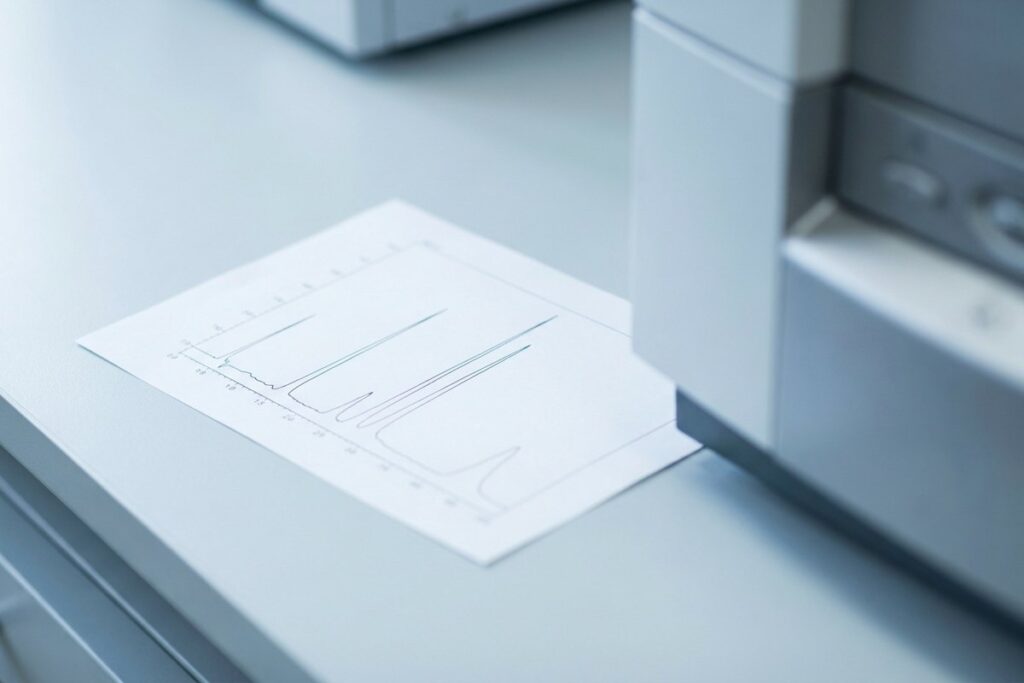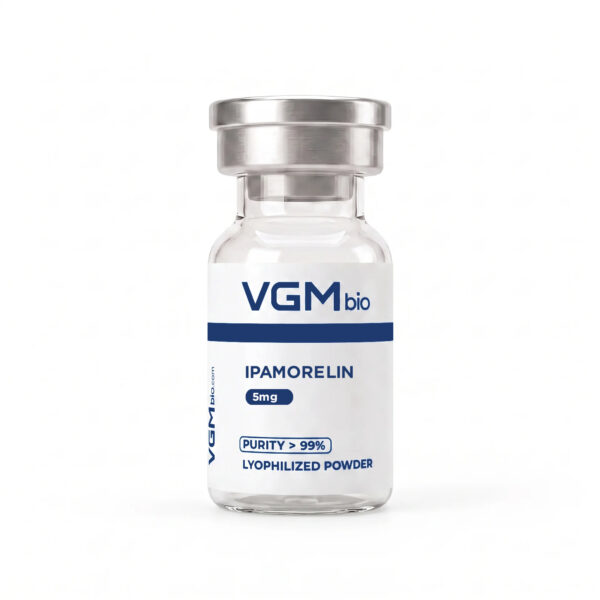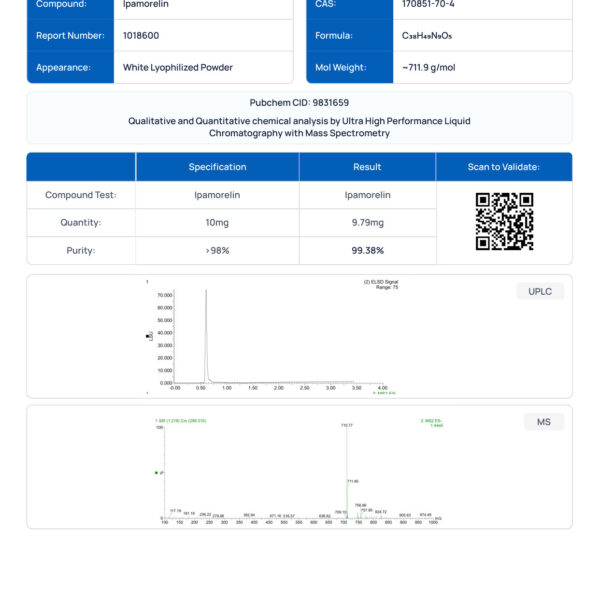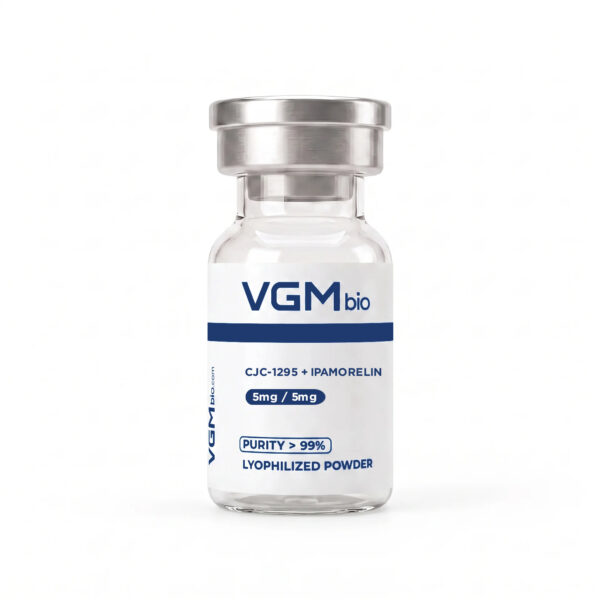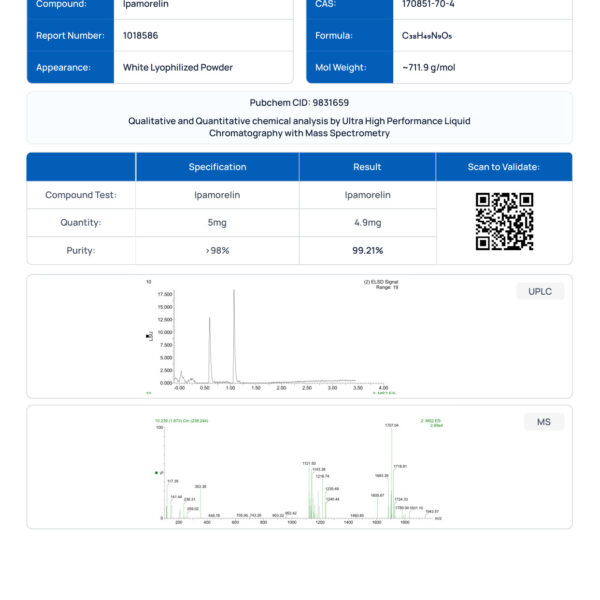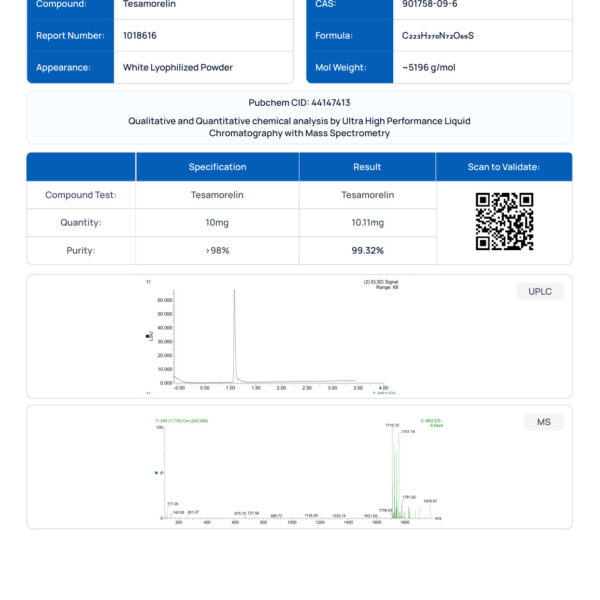
A lyophilised peptide arriving at 99%+ purity can still give you inconsistent results if it is stored badly. Purity is a measurement taken at release; stability is what happens between that measurement and your experiment.
What actually degrades a peptide
Three mechanisms account for most losses in a research setting:
- Hydrolysis — water is the main enemy. Once a peptide is in solution, the backbone is exposed to cleavage, which is why reconstituted material has a far shorter usable life than powder.
- Oxidation — sequences containing methionine, cysteine or tryptophan are particularly sensitive to oxygen and light.
- Freeze–thaw cycling — each cycle concentrates solutes and stresses the molecule. Repeatedly thawing one vial is worse than storing several small aliquots.
Realistic timeframes
As a working rule for lyophilised powder kept sealed, dry and cold:
- −20 °C, lyophilised — stable for 24 months or more.
- 2–8 °C, lyophilised — acceptable for weeks, not months.
- Room temperature, lyophilised — treat as short-term only; fine for transit, not for storage.
- Reconstituted, 2–8 °C — typically 14–28 days depending on the sequence and the diluent.
Practical handling
Let a vial reach room temperature before opening it. Cold glass pulls in atmospheric moisture the moment the seal is broken, and that moisture is what starts the clock on hydrolysis. Reconstitute gently down the vial wall rather than directly onto the powder, keep material out of direct light, and aliquot anything you expect to use across multiple sessions.
None of this is exotic — it is simply the difference between a compound performing the way its certificate says it should and quietly losing potency in your fridge.
For research use only. Not for human or veterinary use.